
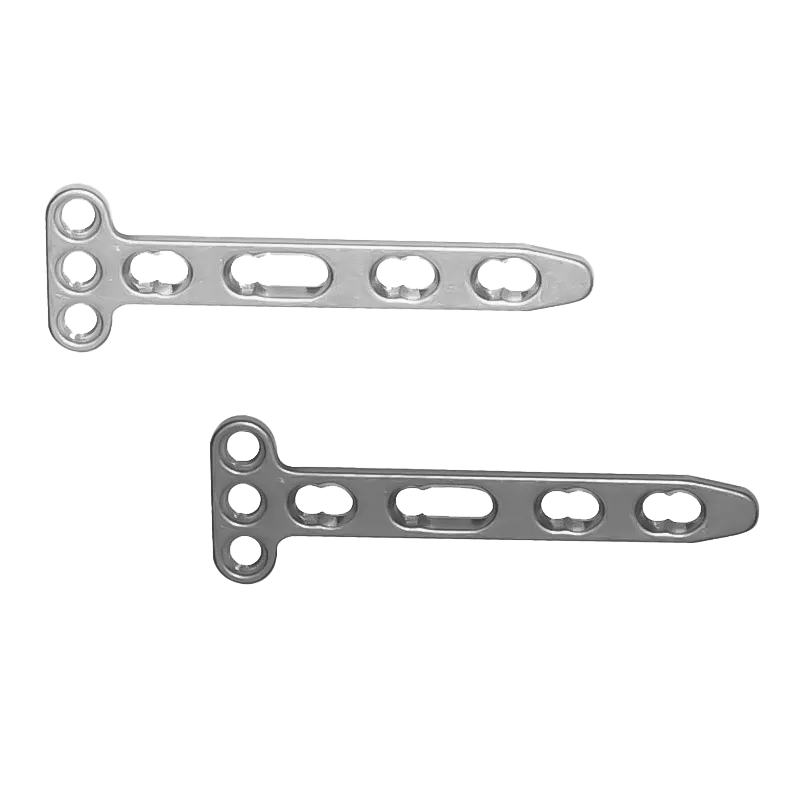
Locking Dorsal Distal Radius T- Plate Head 3 Holes 2.7mm
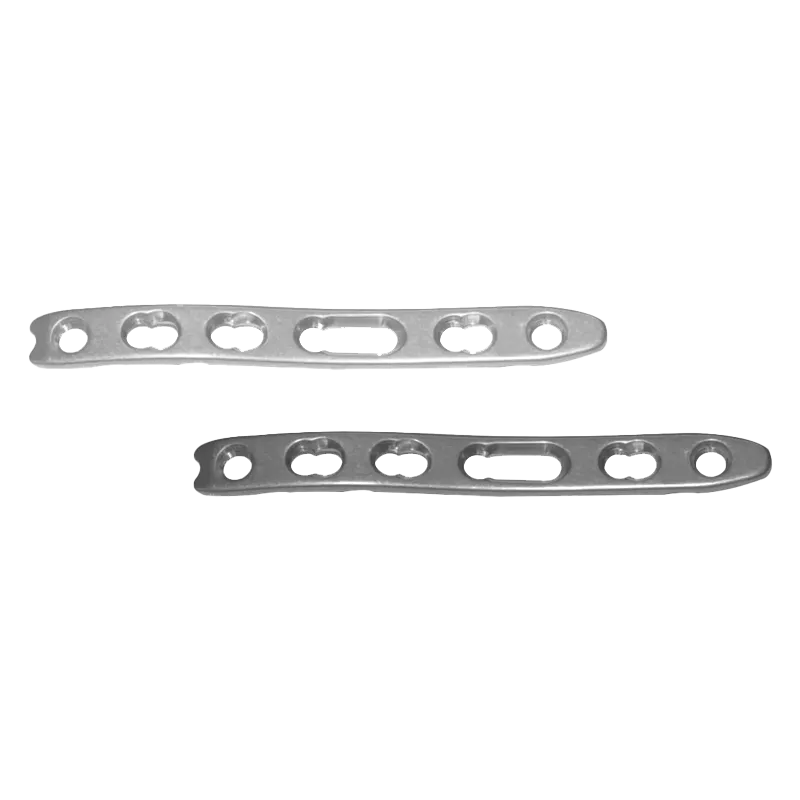
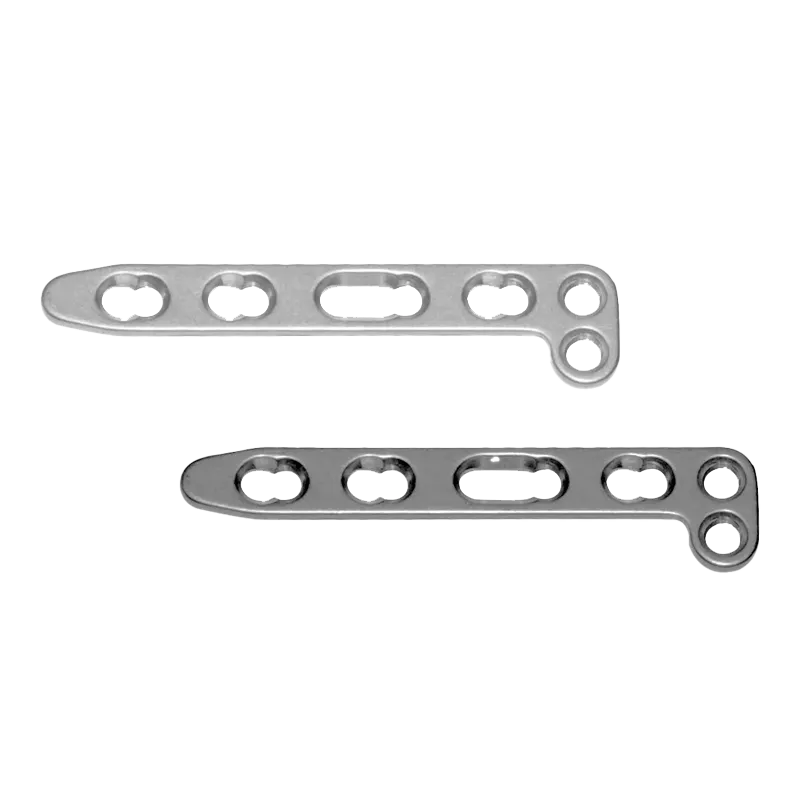
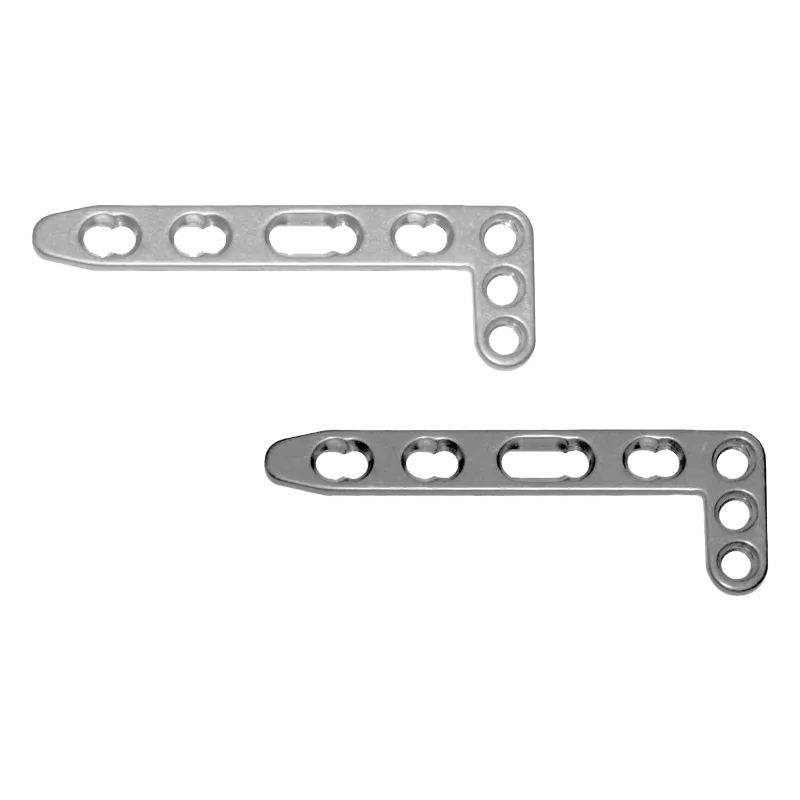
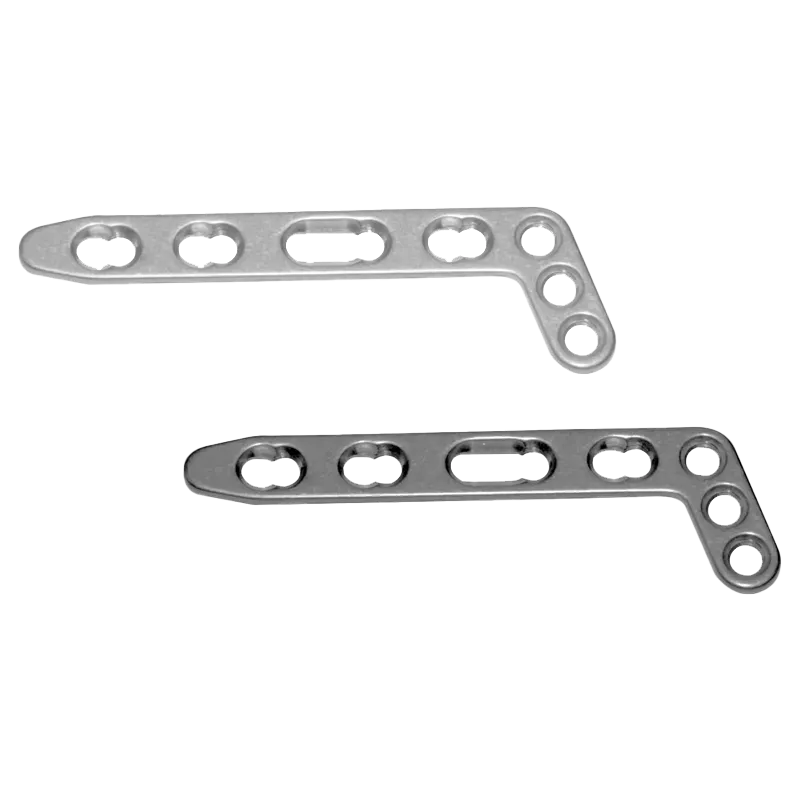
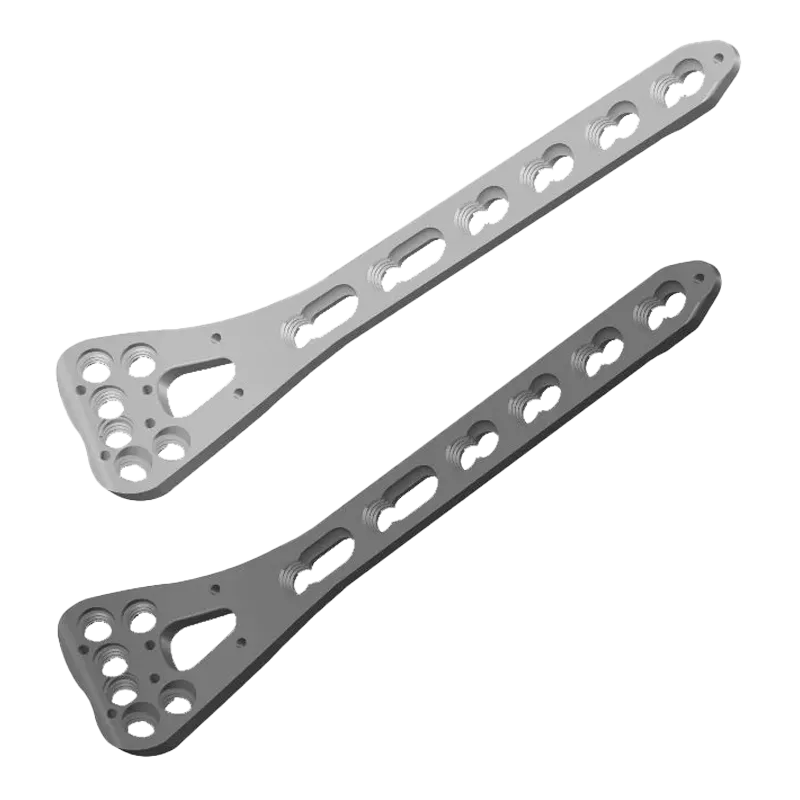
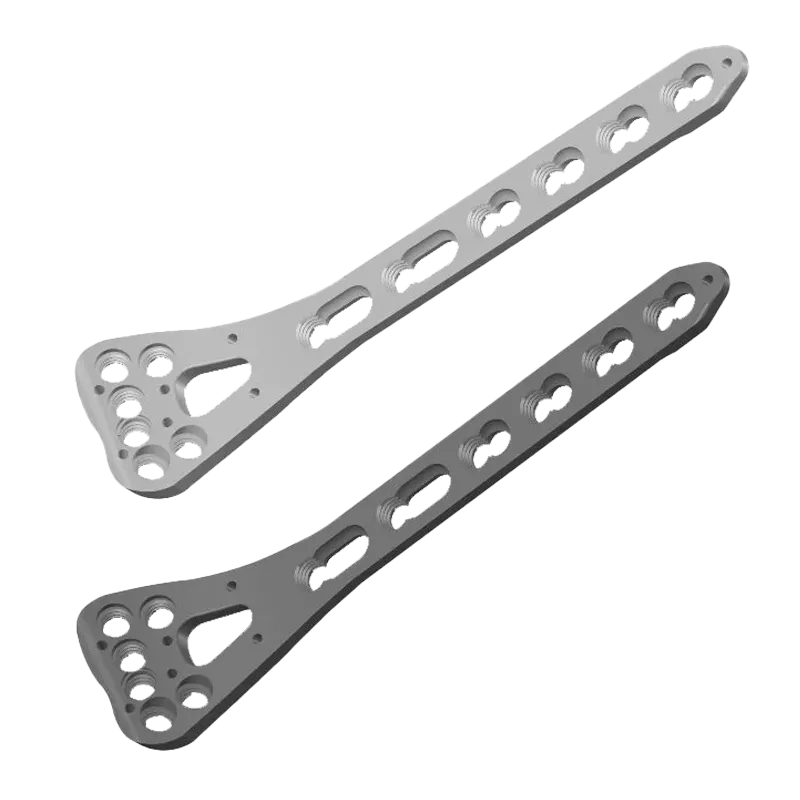
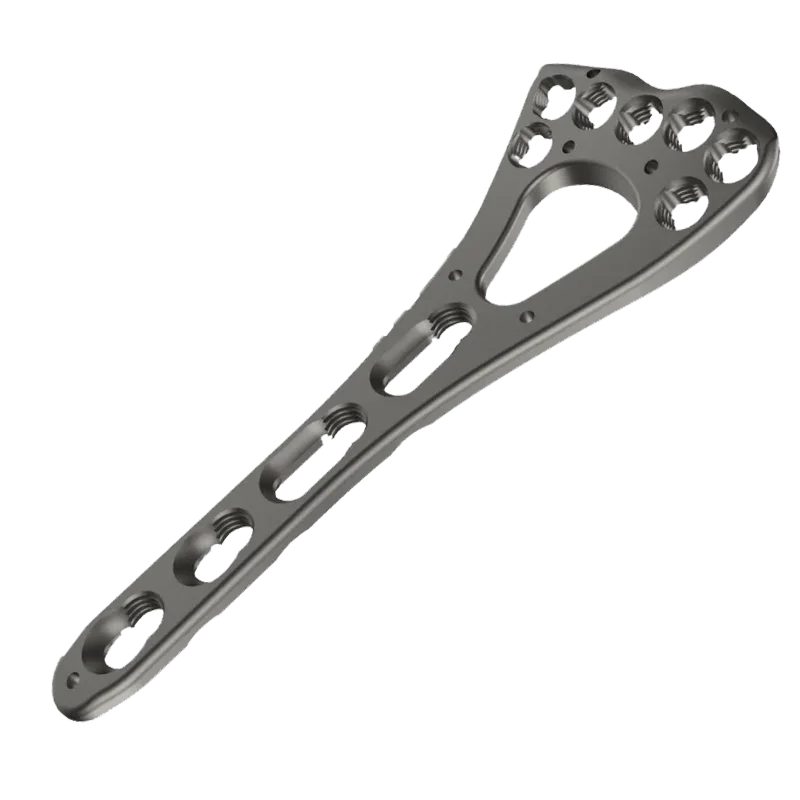
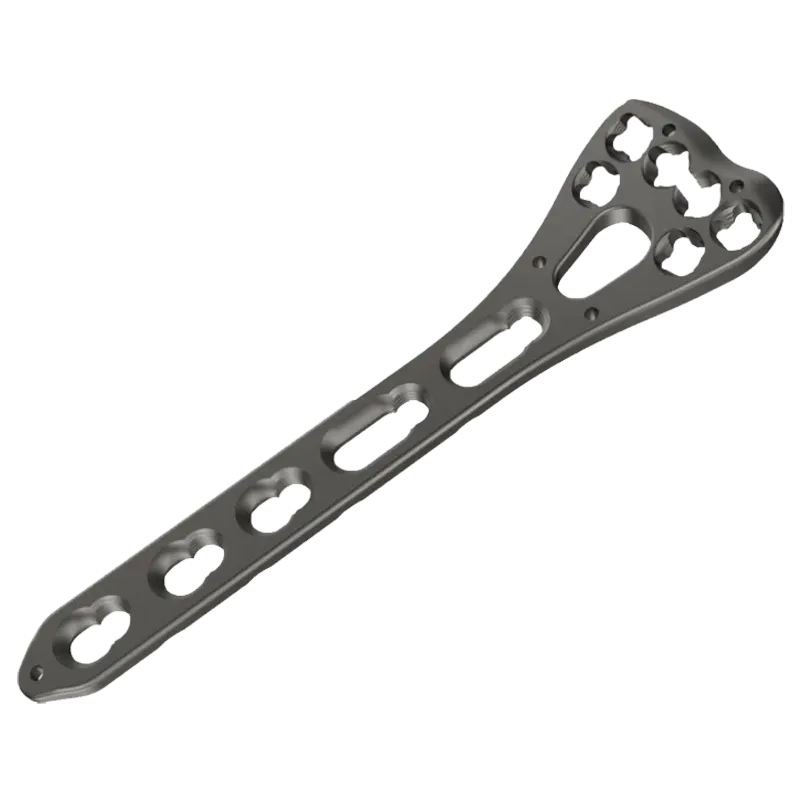
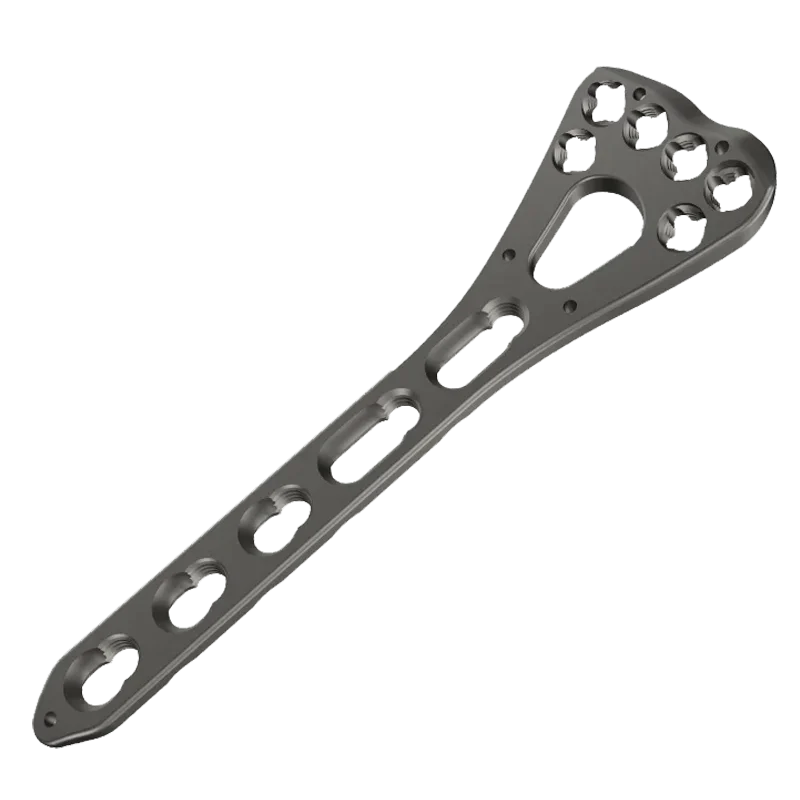
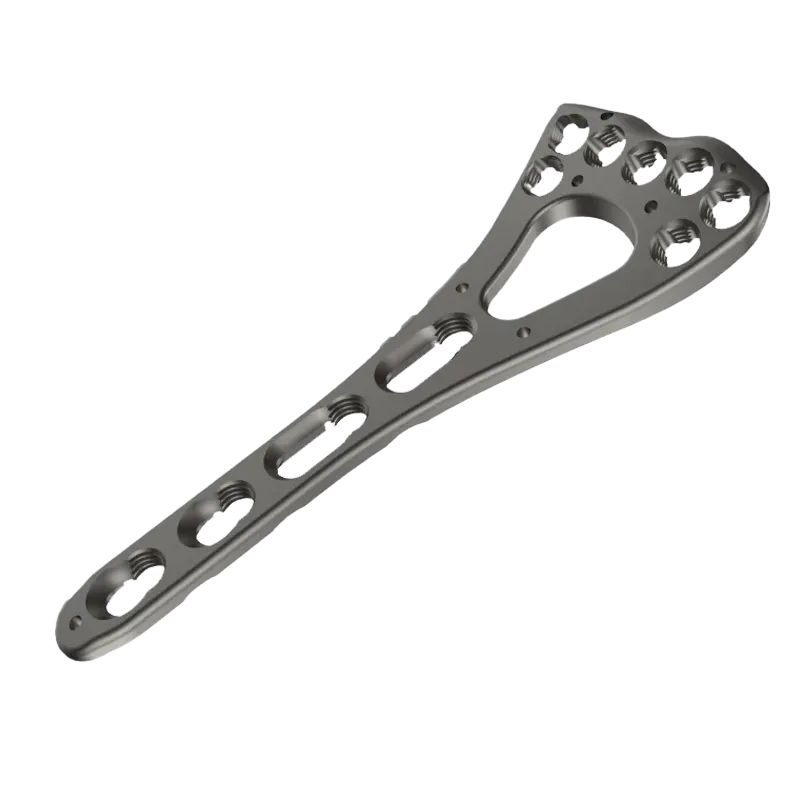
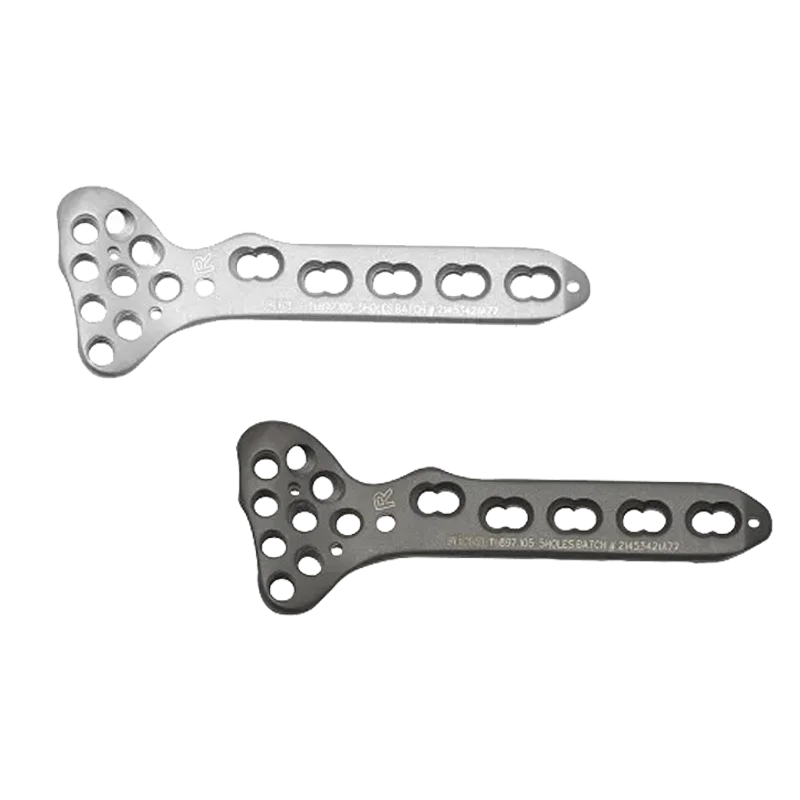


Locking Distal Radius Plates are engineered to provide stable fixation for complex distal radius fractures, including intra-articular and osteoporotic cases. Designed with anatomically contoured profiles, these plates ensure an optimal fit, minimizing soft tissue irritation and reducing the need for intraoperative adjustments. The locking screw mechanism enhances angular stability, supporting early mobilization and consistent healing outcomes. Precision-machined from medical-grade titanium or stainless steel, the implants offer high strength, corrosion resistance, and biocompatibility. Multiple screw hole configurations allow surgeons to address varied fracture patterns with confidence, making them a reliable choice in modern orthopedic trauma care.
Siora manages a huge inventory of locking distal radius plates of different types and sizes to address both simple and complex fracture patterns. Our distal radius system is designed to accommodate varying patient anatomies while delivering improved post-surgical outcomes.

Designed for dorsal fixation, this T-shaped plate offers strong subchondral support with three head holes for precise screw placement. It ensures stable fixation in complex distal radius fractures while maintaining anatomical alignment.
| Cat No. (Stainless Steel) | Holes | Cat No. (Titanium) |
| 884.003 – 884.004 | 3 – 4 | Ti.884.003 – Ti.884.004 |
This straight dorsal distal radius plate is ideal for simple dorsal fractures, offering rigid fixation with a low-profile design. It allows accurate alignment and minimizes soft tissue irritation during recovery.
| Cat No. (Stainless Steel) | Holes | Cat No. (Titanium) |
| 885.005 – 885.006 | 5 – 6 | Ti.885.005 – Ti.885.006 |
Featuring an L-shaped design, this distal radius plate supports targeted fixation in smaller fracture fragments. Two head holes enable controlled screw positioning for stable and reliable outcomes.
| Cat No. (Stainless Steel) | Holes | Cat No. (Titanium) |
| 886.003 – 886.004 | 3 – 4 (Left) | Ti.886.003 – Ti.886.004 |
| 886.103 – 886.104 | 3 – 4 (Right) | Ti.886.103 – Ti.886.104 |
With three head holes, this L-plate provides enhanced fixation in dorsal fractures. Its anatomical contour helps maintain reduction while offering flexibility in screw placement.
| Cat No. (Stainless Steel) | Holes | Cat No. (Titanium) |
| 887.003 – 887.004 | 3 – 4 (Left) | Ti.887.003 – Ti.887.004 |
| 887.103 – 887.104 | 3 – 4 (Right) | Ti.887.103 – Ti.887.104 |
Engineered with a 20° angled head, this plate improves access to challenging fracture sites. It ensures optimal screw trajectory and stable fixation in complex dorsal radius injuries.
| Cat No. (Stainless Steel) | Holes | Cat No. (Titanium) |
| 888.003 – 888.004 | 3 – 4 (Left) | Ti.888.003 – Ti.888.004 |
| 888.103 – 888.104 | 3 – 4 (Right) | Ti.888.103 – Ti.888.104 |
This volar plate for distal radius fracture is designed with a compact head width for smaller anatomies. It ensures angular stability and supports early mobilization.
| Cat No. (Stainless Steel) | Holes | Cat No. (Titanium) |
| 894.002 – 894.010 | 2 – 10 (Left) | Ti.894.002 – Ti.894.010 |
| 894.102 – 894.110 | 2 – 10 (Right) | Ti.894.102 – Ti.894.110 |
With a wider head, this volar locking distal radius plate provides increased coverage and support for larger fracture areas. It delivers stable fixation while preserving anatomical alignment.
| Cat No. (Stainless Steel) | Holes | Cat No. (Titanium) |
| 894.202 – 894.210 | 2 – 10 (Left) | Ti.894.202 – Ti.894.210 |
| 894.302 – 894.310 | 2 – 10 (Right) | Ti.894.302 – Ti.894.310 |
Featuring five head holes, this volar locking plate allows versatile screw placement for complex fractures. It ensures strong fixation and optimal load distribution across the fracture site.
| Cat No. (Stainless Steel) | Holes | Cat No. (Titanium) |
| 867.002 – 867.010 | 2 – 10 (Left) | Ti.867.002 – Ti.867.010 |
| 867.102 – 867.110 | 2 – 10 (Right) | Ti.867.102 – Ti.867.110 |
Specifically designed for fractures near the joint surface, this juxta articular distal radius plate provides strong subchondral support. Its low-profile structure ensures minimal irritation while maintaining accurate joint reconstruction.
| Cat No. (Stainless Steel) | Holes | Cat No. (Titanium) |
| 897.003 – 897.005 | 3 – 5 (Left) | Ti.897.003 – Ti.897.005 |
| 897.103 – 897.105 | 3 – 5 (Right) | Ti.897.103 – Ti.897.105 |
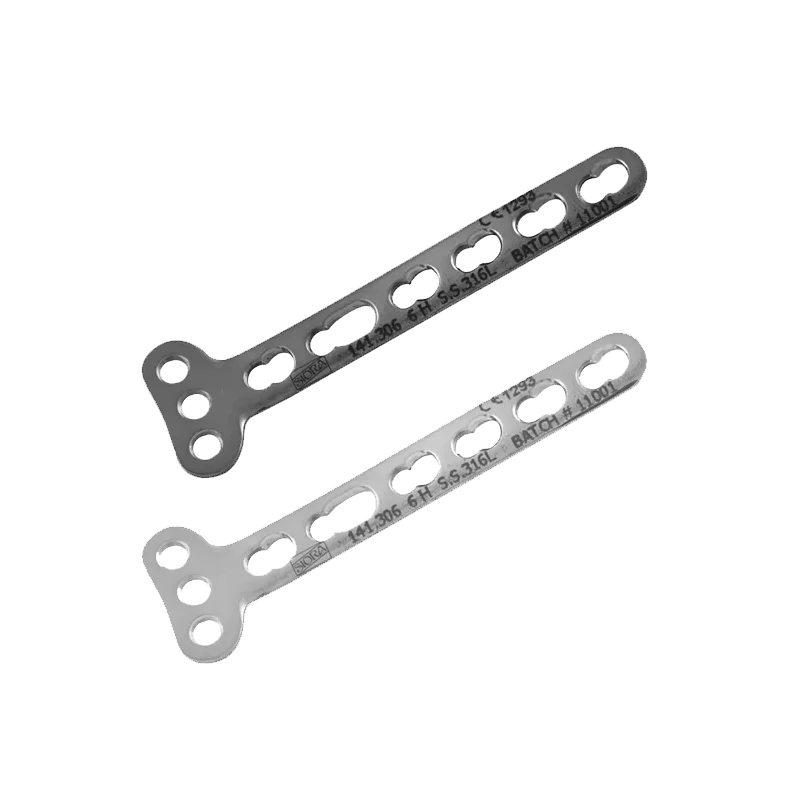
Designed for distal radius fracture fixation, this right-angled locking T-plate provides stable fragment support, angular stability, and reliable fixation while helping maintain anatomical alignment during healing.
| Cat No. (Stainless Steel) | Holes | Cat No. (Titanium) |
| 141.303 – 141.309 | 3 – 9 | Ti.141.303 – Ti.141.309 |
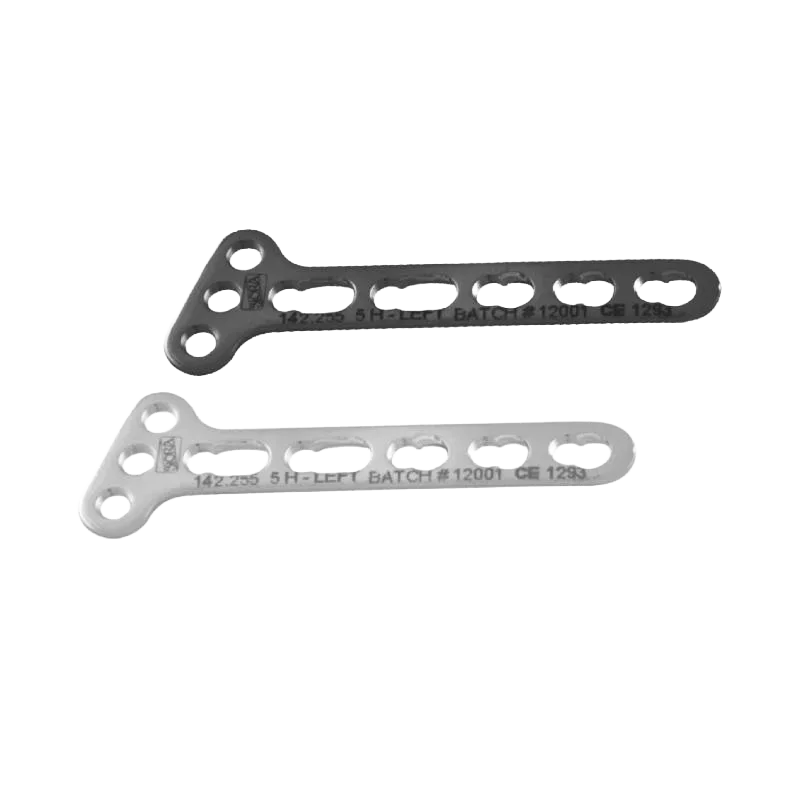
This oblique-angled locking T-plate is designed to accommodate distal radius anatomy, offering secure fixation, improved screw placement flexibility, and dependable stability for fracture management.
| Cat No. (Stainless Steel) | Holes | Cat No. (Titanium) |
| 142.203 – 142.209 | 3 – 9 (Right) | Ti.142.203 – Ti.142.209 |
| 142.253 – 142.259 | 3 – 9 (Left) | Ti.142.253 – Ti.142.259 |
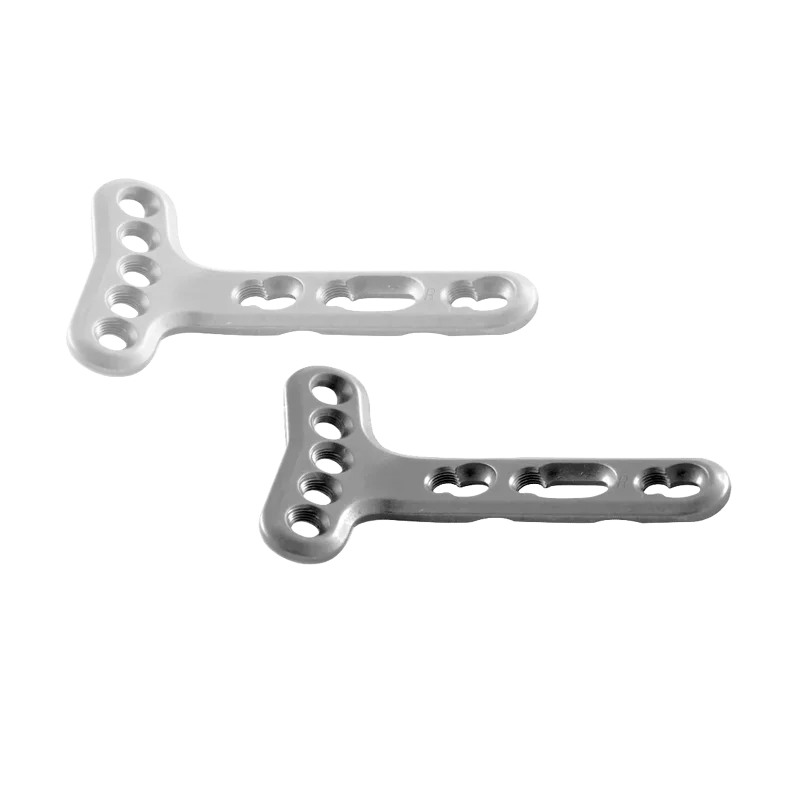
Engineered for extra-articular distal radius fractures, this 2.7mm locking plate features a five-hole head for enhanced fixation options, stable construct strength, and precise fracture stabilization.
| Cat No. (Stainless Steel) | Holes | Cat No. (Titanium) |
| 141.403 – 141.410 | 3 – 10 (Left) | Ti.141.403 – Ti.141.410 |
| 141.413 – 141.420 | 3 – 10 (Right) | Ti.141.413 – Ti.141.420 |
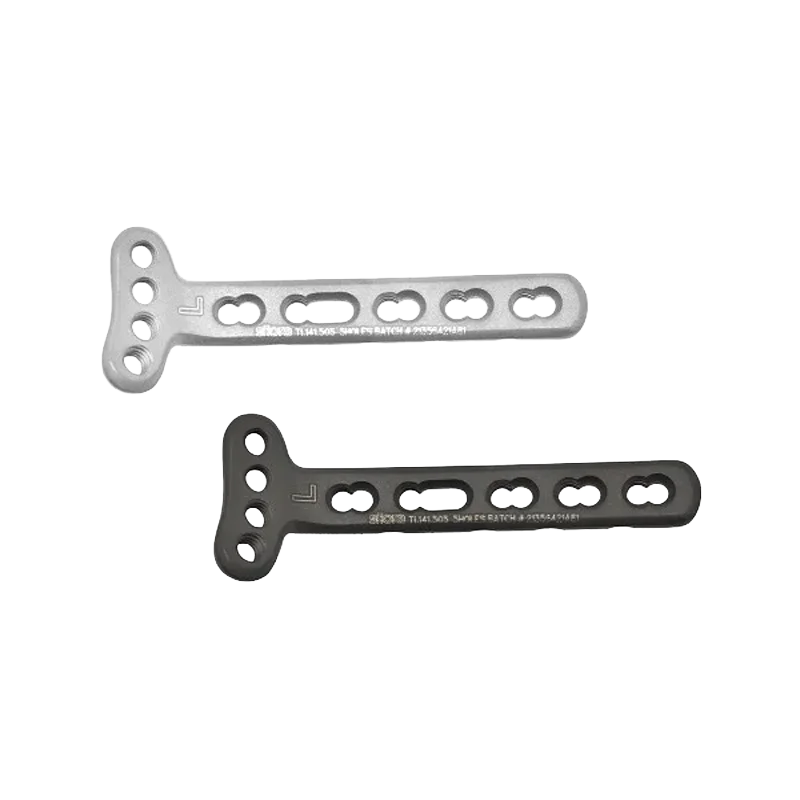
Featuring a four-hole head configuration, this extra-articular locking T-plate delivers stable fixation, controlled compression, and effective support for distal radius fracture reconstruction procedures.
| Cat No. (Stainless Steel) | Holes | Cat No. (Titanium) |
| 141.503 – 141.505 | 3 – 5 (Left) | Ti.141.503 – Ti.141.505 |
| 141.513 – 141.515 | 3 – 5 (Right) | Ti.141.513 – Ti.141.515 |
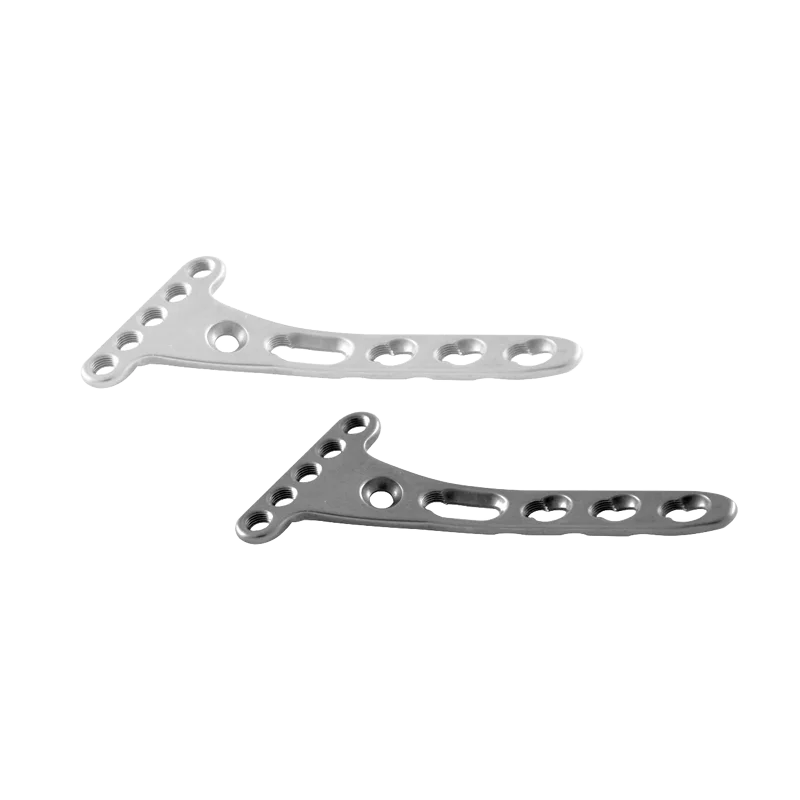
Designed with an oblique-angled profile and five-hole head, this plate enables versatile screw positioning, strong fixation, and anatomical adaptation for extra-articular distal radius fractures.
| Cat No. (Stainless Steel) | Holes | Cat No. (Titanium) |
| 142.303 – 142.310 | 3 – 10 (Left) | Ti.142.303 – Ti.142.310 |
| 142.313 – 142.320 | 3 – 10 (Right) | Ti.142.313 – Ti.142.320 |
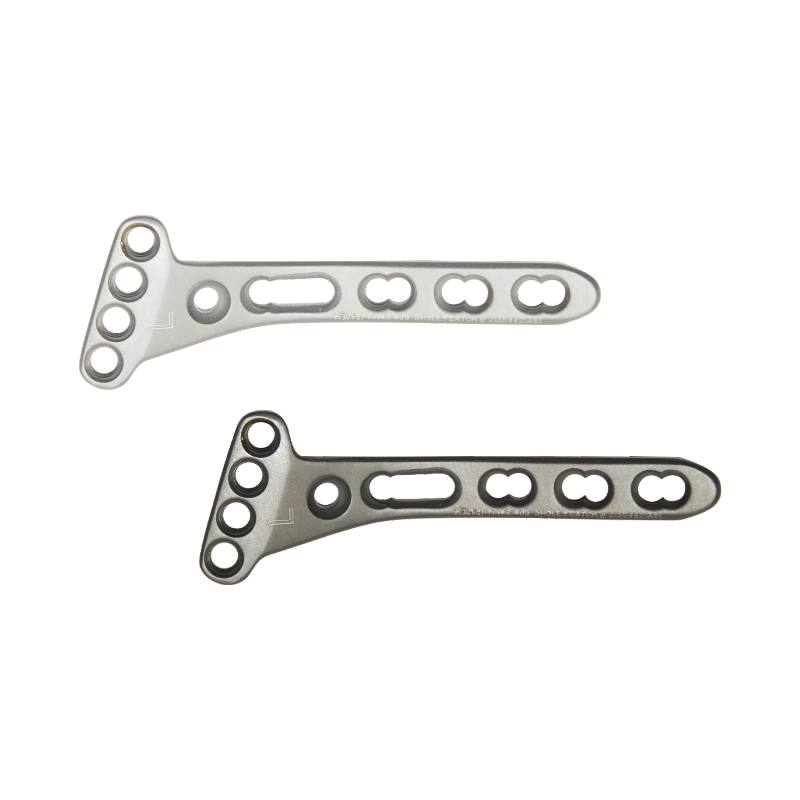
This oblique-angled 2.7mm locking plate provides secure fixation and optimized contouring, helping achieve stable fracture reduction and reliable support in extra-articular distal radius procedures.
| Cat No. (Stainless Steel) | Holes | Cat No. (Titanium) |
| 142.403 – 142.405 | 3 – 5 (Left) | Ti.142.403 – Ti.142.405 |
| 142.413 – 142.415 | 3 – 5 (Right) | Ti.142.413 – Ti.142.415 |
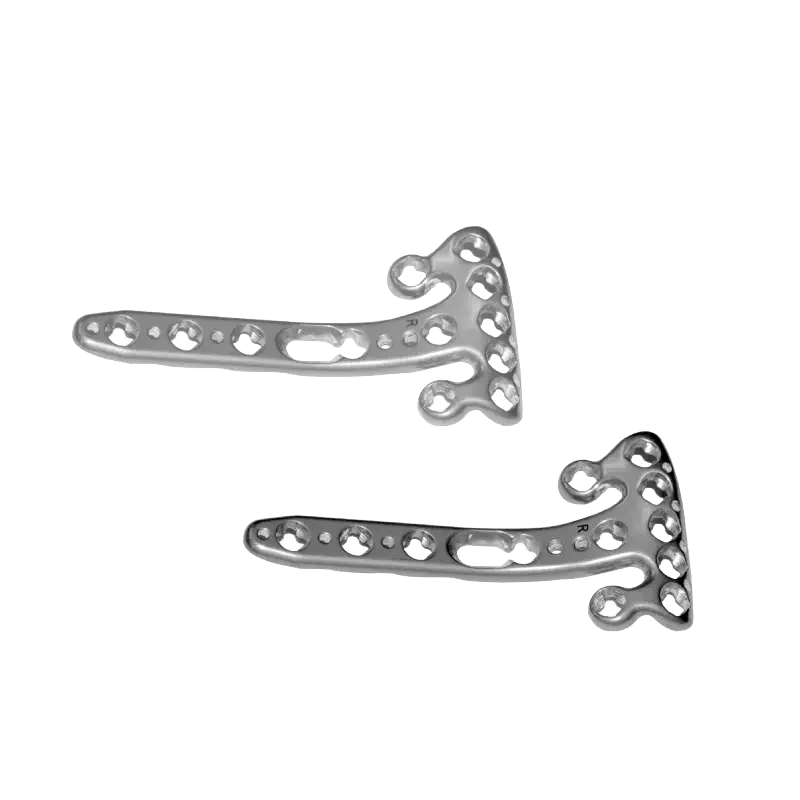
Specially developed for volar rim fractures, this low-profile locking plate offers subchondral support, stable fixation, and anatomical restoration of complex distal radius fracture patterns.
| Cat No. (Stainless Steel) | Holes | Cat No. (Titanium) |
| 881.003 – 881.006 | 3 – 6 (Left) | Ti.881.003 – Ti.881.006 |
| 881.103 – 881.106 | 3 – 6 (Right) | Ti.881.103 – Ti.881.106 |
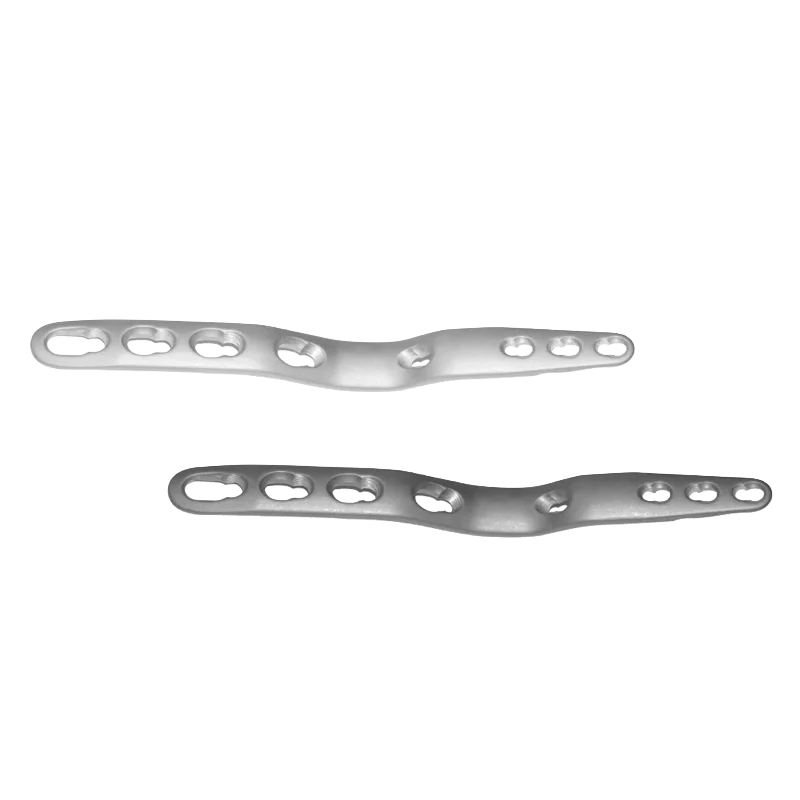
Designed for wrist arthrodesis procedures, this fusion plate provides rigid stabilization, optimal load distribution, and dependable fixation to support successful wrist joint fusion outcomes.
| Cat No. (Stainless Steel) | Holes | Cat No. (Titanium) |
| 880.008 | 8 | Ti.880.008 |

Offering maximum coverage, this plate features variable angle locking for precise screw orientation. It is ideal for complex and comminuted fractures requiring strong stabilization.
| Cat No. (Stainless Steel) | Holes | Cat No. (Titanium) |
| 867.002V – 867.010V | 2 – 10 (Left) | Ti.867.002V – Ti.867.010V |
| 867.102V – 867.110V | 2 – 10 (Right) | Ti 867.102V – Ti 867.110V |
This variable angle volar locking plate enables flexible screw positioning for tailored fixation. Its compact design suits smaller bones while ensuring strong and stable fracture support.
| Cat No. (Stainless Steel) | Holes | Cat No. (Titanium) |
| 895.002 – 895.010 | 2 – 10 (Left) | Ti.895.002 – Ti.895.010 |
| 895.102 – 895.110 | 2 – 10 (Right) | Ti.895.102 – Ti.895.110 |
Designed for broader coverage, this volar locking plate distal radius combines variable angle technology with a wider head. It enhances fixation options for complex distal radius fractures.
| Cat No. (Stainless Steel) | Holes | Cat No. (Titanium) |
| 895.202 – 895.210 | 2 – 10 (Left) | Ti.895.202 – Ti.895.210 |
| 895.302 – 895.310 | 2 – 10 (Right) | Ti.895.302 – Ti.895.310 |
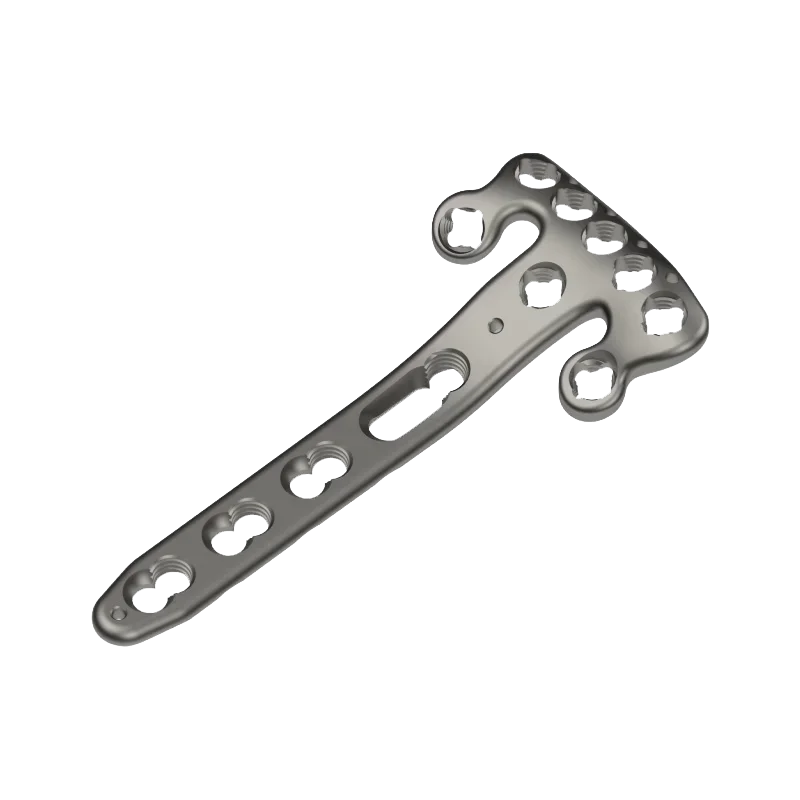
Featuring variable-angle locking technology, this volar rim plate allows customized screw trajectories, enhanced fragment capture, and secure fixation for challenging distal radius fractures.
| Cat No. (Stainless Steel) | Holes | Cat No. (Titanium) |
| 881.203 – 881.206 | 3 – 6 (Left) | Ti.881.203 – Ti.881.206 |
| 881.213 – 881.216 | 3 – 6 (Right) | Ti.881.213 – Ti.881.216 |
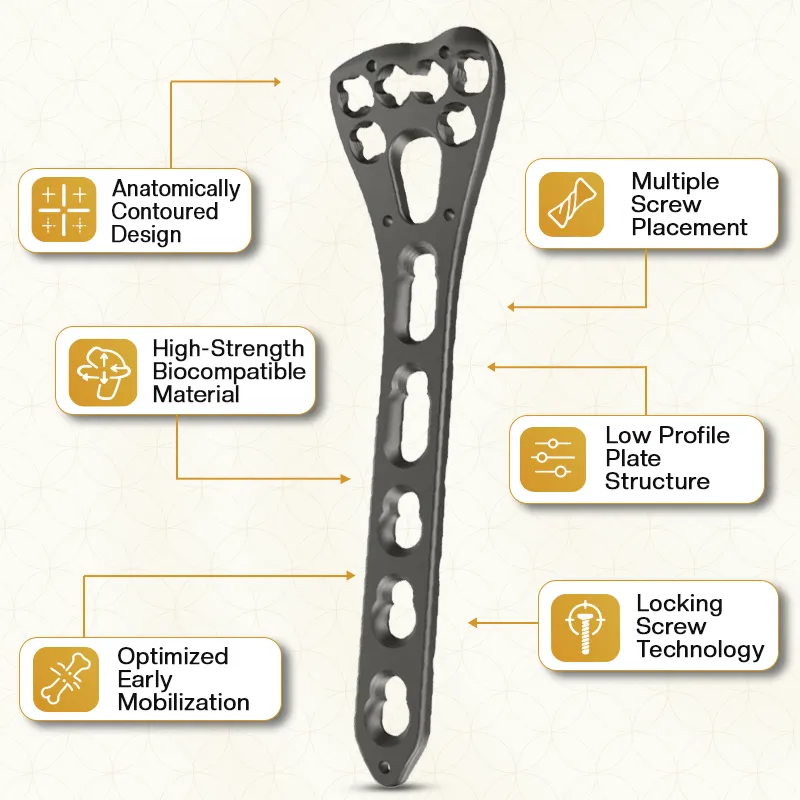
Pre-shaped to match the distal radius anatomy, ensuring better fit, reduced soft tissue irritation, and minimal intraoperative bending.
Threaded screw-plate interface creates a fixed-angle construct, offering superior stability, especially in osteoporotic bone.
Strategically placed holes allow versatile screw positioning to effectively manage simple to complex fracture patterns.
Slim design minimizes tendon irritation and enhances patient comfort without compromising strength.
Manufactured using medical-grade titanium or stainless steel for excellent strength, corrosion resistance, and long-term safety.
Stable fixation enables early wrist movement, helping reduce stiffness and promote faster functional recovery.
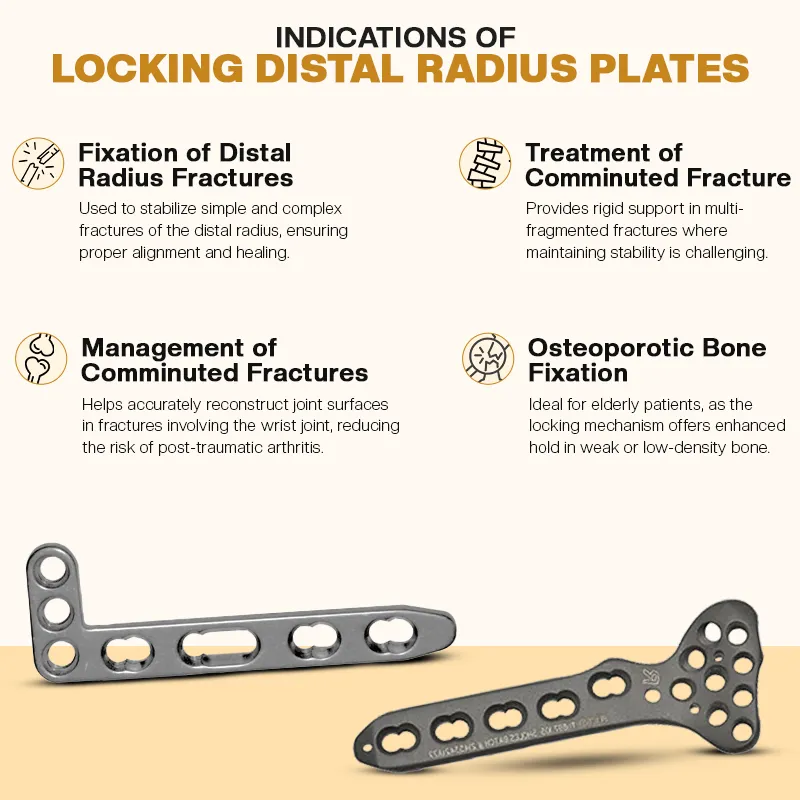
Used to stabilize simple and complex fractures of the distal radius, ensuring proper alignment and healing.
Helps accurately reconstruct joint surfaces in fractures involving the wrist joint, reducing the risk of post-traumatic arthritis.
Provides rigid support in multi-fragmented fractures where maintaining stability is challenging.
Ideal for elderly patients, as the locking mechanism offers enhanced hold in weak or low-density bone.
Used in revision procedures to realign improperly healed distal radius fractures and restore wrist function.
Ensures stable fixation in fractures caused by severe trauma, enabling early rehabilitation and improved functional outcomes.
A distributor should stock a complete range of distal radius plates, including volar locking plates, dorsal plates, T-plates, and variable angle plates. Different fracture patterns require different plate designs, so having multiple variants helps serve hospitals and surgeons better. Distal radius systems are designed to handle complex fractures and often include a full set of plates and instruments, making a diversified inventory more profitable.
Most global markets demand distal radius plates made from medical-grade titanium or stainless steel. Titanium is preferred for premium markets due to its lightweight and biocompatibility, while stainless steel is widely used because it is cost-effective and durable. The choice of material directly affects pricing, demand, and distributor margins in different regions.
A complete distal radius plating system typically includes multiple plate designs along with compatible screws and surgical instruments such as drills, clamps, and targeting devices. Providing a full system allows distributors to offer a complete solution to hospitals and surgeons, improving customer satisfaction and increasing order value.
Locking plate technology allows screws to lock into the plate, creating a fixed-angle construct that provides superior stability compared to conventional plates. This reduces dependence on bone quality and preserves blood supply, resulting in better healing outcomes and lower risk of implant failure.
Yes, many leading manufacturers provide OEM and private labeling services, allowing distributors to sell products under their own brand. This includes customized packaging, branding, and product specifications, helping distributors differentiate themselves in competitive markets.
Lead time for bulk orders generally depends on order volume and customization requirements. Most manufacturers deliver within a few weeks after order confirmation, along with proper export packaging and documentation. Efficient logistics and supply chain management are critical for maintaining distributor operations.
Common challenges include inconsistent product quality, delays in delivery, lack of proper certifications, and pricing competition. Partnering with an experienced and certified manufacturer, like Siora Surgicals Pvt. Ltd., helps overcome these issues and ensures a reliable supply for long-term business growth.
To maintain consistency, distributors should work with manufacturers that have advanced infrastructure, strict quality control systems, and a strong export network. Reliable suppliers ensure the uninterrupted availability of products and consistent performance across batches.
India has become a global hub for orthopedic implant manufacturing due to its ability to offer high-quality products at competitive prices. Manufacturers in India, such as Siora Surgicals Pvt. Ltd., follow international standards, provide OEM solutions, and have strong export capabilities, making them an attractive choice for global distributors.
If you are interested in our products and want to know more details, please leave message here, we will reply you as soon as we can.